People Search Sites vs. Background Check Websites: Are They Actually the Same Thing?
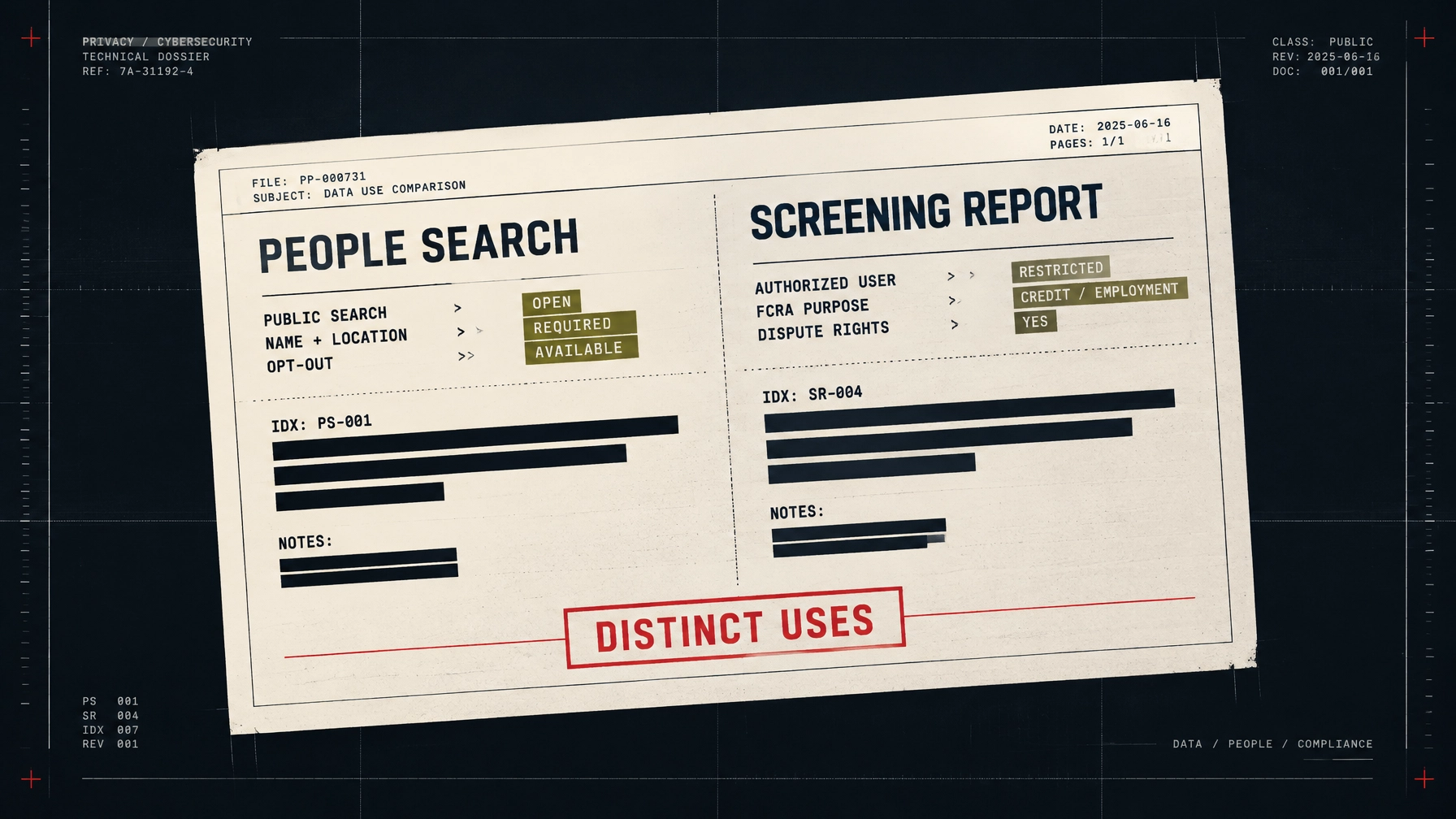
You searched your name and found websites offering “background reports.” Are those the same reports an employer or landlord might use? Usually not. People-search sites and regulated background-screening services can show overlapping information, but they are generally built for different purposes, and different rules may apply.
Knowing which kind of report you are looking at helps you choose the right next step. A people-search listing may have an opt-out process. If a consumer report is used to assess you for a job or housing, you may have rights to review and dispute information under federal law.
What people-search sites do
People-search sites let the public look up people by name, often with a city or state to narrow the results. They are one type of data broker website: a service that gathers and organizes information from public records and other available sources.
A profile may include addresses, phone numbers, age ranges, relatives, or links to public records. Some sites sell subscriptions or individual reports, and some include sections that look like criminal-record searches. The information can be incomplete, outdated, or associated with someone who has a similar name.
These sites generally serve open-ended searches by members of the public. Check each site’s terms, but people-search reports typically say they are not for employment, tenant-screening, credit, or insurance eligibility decisions.
What FCRA-regulated screening companies do
A company that regularly assembles or evaluates information to provide consumer reports for decisions such as employment, housing, credit, or insurance may be a consumer reporting agency (CRA) under the Fair Credit Reporting Act (FCRA). The company’s function and the report’s intended use matter, not just the label on its website.
Employers, landlords, and other authorized users may obtain consumer reports for specific permissible purposes. A report might include information such as criminal or eviction records, identity details, or employment and education verification. The sources and checks vary by provider and by report.
The FCRA sets requirements for covered reports and their use. These include rules about permissible purpose and accuracy, and rights for consumers to access and dispute information. For employment checks, an employer generally must get your written permission before obtaining a consumer report. If the employer may take adverse action based on it, additional steps generally apply, including giving you a copy of the report and a summary of your rights before the decision is final.
If a landlord takes an adverse action based on a consumer report, such as denying an application or requiring a higher deposit, they generally must provide an adverse-action notice with information about the reporting company. You can learn more about reviewing rental reports from the Consumer Financial Protection Bureau.
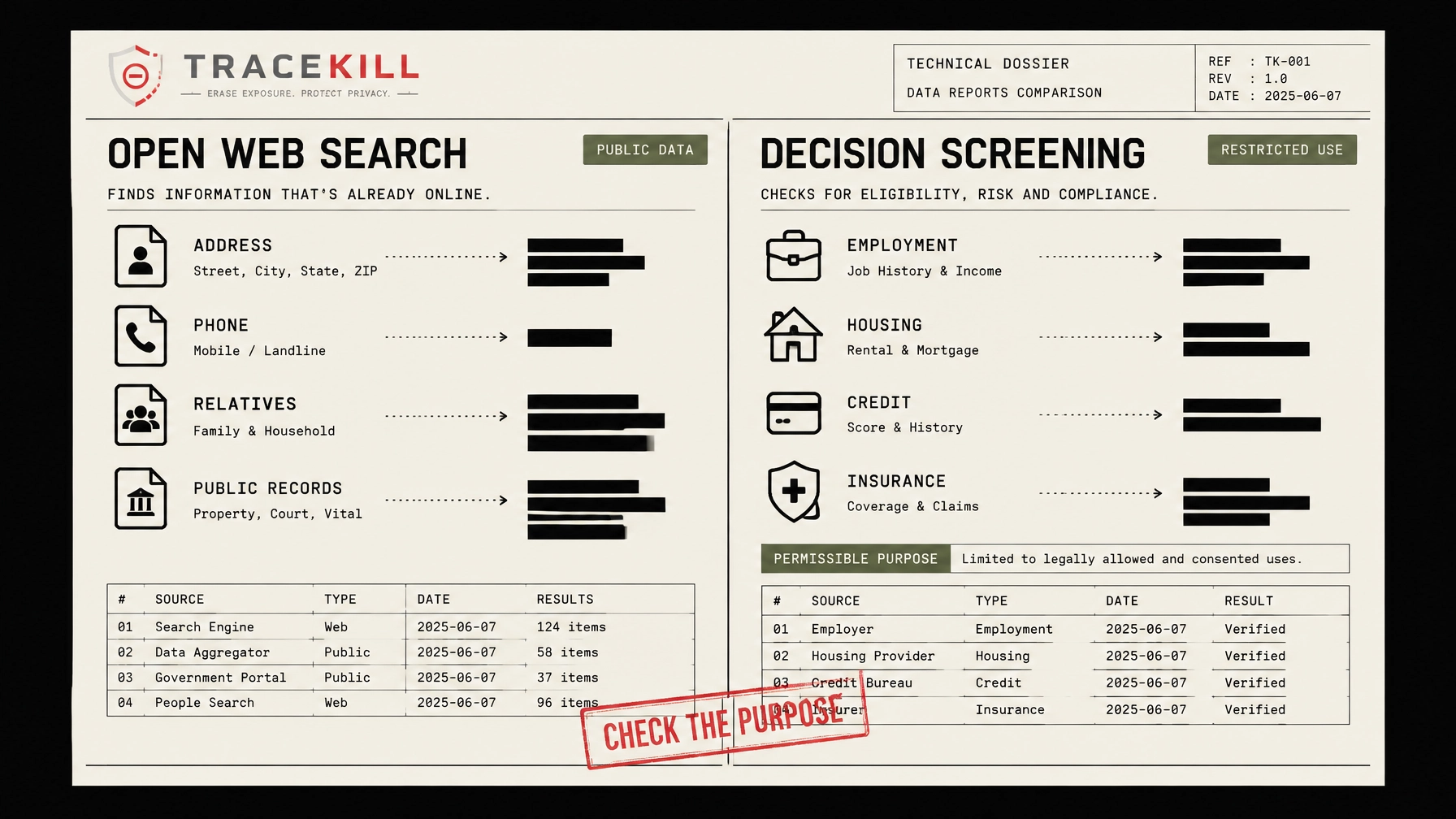
The main differences
| People-search and data broker sites | FCRA-regulated screening reports | |
|---|---|---|
| Who can access them? | Usually available to members of the public, often through a subscription or paid report. | Typically provided to an identified user with a permissible purpose. |
| What are they for? | Finding or learning about people through searchable profiles. | Supporting a covered decision, such as hiring, renting, credit, or insurance eligibility. |
| What information may appear? | Aggregated public records and other available data, such as addresses, phone numbers, and relatives. | Information relevant to the requested screening, potentially including records and verification results. |
| What rules apply? | A public-facing people-search product is generally not a CRA, but check its terms. Classification depends on the product and how it is used. | FCRA requirements apply when the provider and report meet the law’s definition of a consumer reporting agency and consumer report. |
| What can you do about it? | You can usually look for the site’s opt-out process. | You may have rights to obtain and dispute information, and specific procedures apply when a report is used for a covered decision. |
This is a practical comparison, not a rule that every site fits neatly into one category. A company can offer different products, and the FCRA analysis depends on what a service actually does and how the report is intended or used. A disclaimer alone does not determine whether a product is covered.
Why the difference matters
A people-search report is not a substitute for a proper employment or tenant-screening process. Its information may not be verified for a particular decision, and the site’s terms commonly prohibit using its reports for employment, housing, credit, or insurance eligibility. Using the wrong kind of report can create legal and practical problems.
The reverse distinction matters too. If an employer or landlord obtains a covered consumer report about you, you may have FCRA rights that do not apply in the same way to an ordinary people-search listing. If you are told a report affected a decision, review the notice, identify the reporting company, and follow the instructions for getting and disputing the report. The CFPB explains employment background checks.
People-search listings usually have a different route: identify the profile that is actually yours and follow the site’s opt-out process. Removing a listing from one site does not remove source records or copies elsewhere, and listings can return when sites refresh their information.
What to do about your own exposure
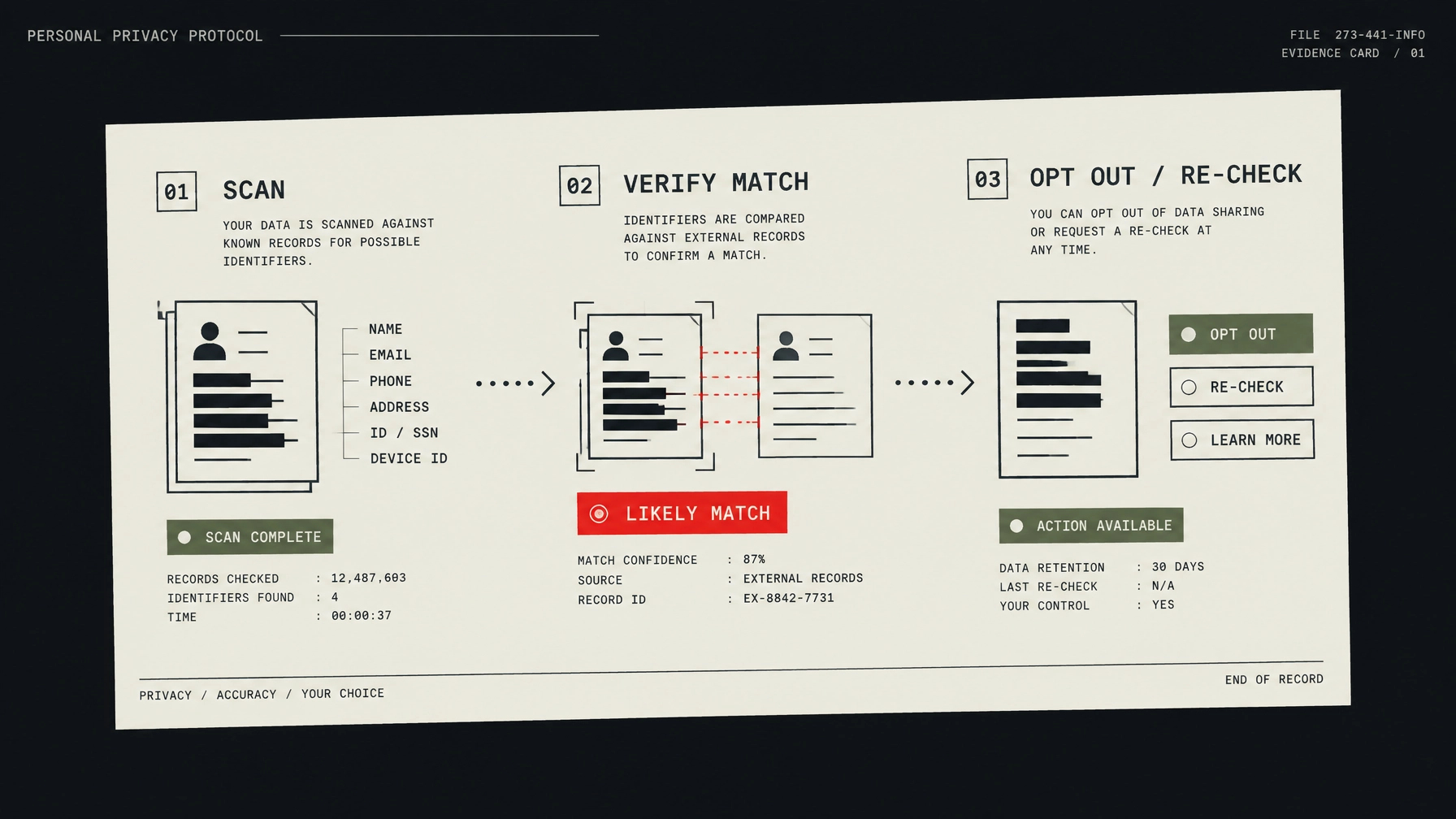
Start by checking likely matches carefully. People with the same or similar names can be mixed up. Compare details such as city, age range, address history, and relatives where those details are shown. Do not submit an opt-out request for a profile unless you have reasonable grounds to believe it is yours.
If you find a match, check the site’s own instructions and terms. Some sites require a separate request for each profile or brand. TraceKill has step-by-step guides for Whitepages, Spokeo, and BeenVerified.
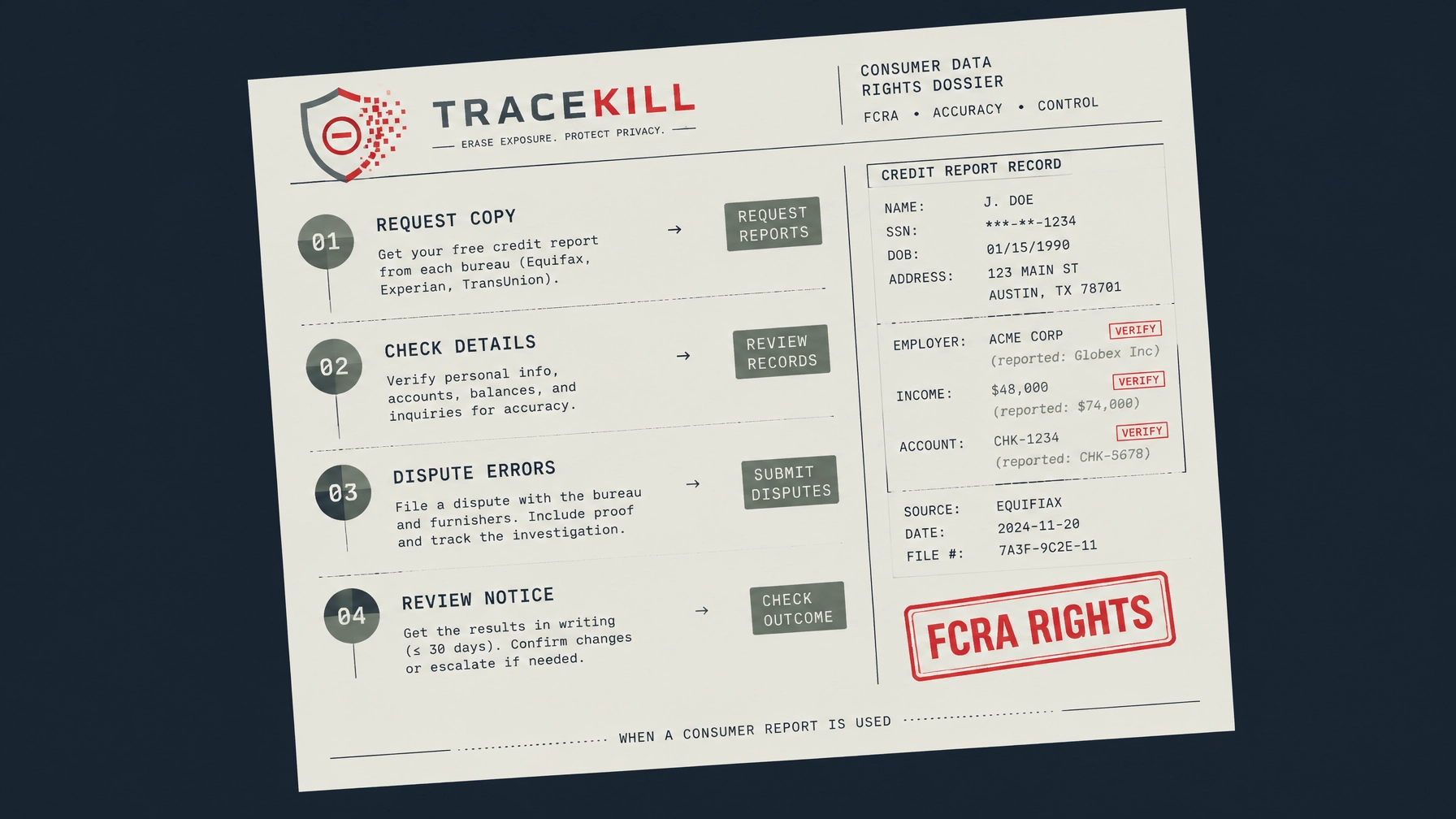
If the information appears in a consumer report used for a covered decision, use the reporting company’s dispute process instead of treating it like a public people-search listing. Be specific about the error and include documents that support your correction request, if available. For general information about the FCRA, visit the FTC’s Fair Credit Reporting Act resource. This overview is not legal advice; federal, state, and local rules may differ.
Check people-search exposure
TraceKill checks monitored data broker and people-search sources for likely public profile matches. Its free scan uses your name and location, requires no account or payment card, and can help you identify listings to review. A match is not proof that a profile is yours, so verify the details before taking action.
You can use a DIY guide for $9.99, or choose monitoring for $8 per month, which includes supported opt-out help and monthly re-checks. Support and public verification vary by source. Processing times and outcomes vary, and listings can reappear. No service can guarantee complete removal.
Start a free scan to see likely matches, or visit TraceKill to review the available options.
Last verified: November 2026. Broker opt-out processes change often — confirm the current steps on the live page before relying on them.
Free scan — no account required
This is one site. There are hundreds more.
Run a free scan to see which monitored sources list you — no card, no account, results in real time as each broker reports back. Do the opt-outs yourself with our guides, or let us file them for you on a paid plan and re-check month after month. We'll never tell you we erased you from the internet.
No credit card · No account · AES-256 encrypted
Keep going
What Happens to Someone’s Personal Information After They Die?
After a death, families are already handling paperwork and practical decisions. Then a search of the person’s name may bring up social profiles, people-search listings, old addresses, or photos. These can remain online because accounts stay open, data brokers retain profile information, and public records generally remain available. Some of this information can be addressed.…
Selling Your Home? Your Old Address Could Remain Online Long After the Sale
You sold the house, moved, and months later a search of your name still shows the old street. That can happen because a sale creates public records, and other websites may copy or combine information from them. You can take steps to address some of those online copies. The right step depends on where the…
A Data Broker Rejected Your Removal Request. Here’s What to Do
You submitted an opt-out request, received a rejection, or heard nothing back. The listing is still there. That does not always mean you are out of options. Most rejected opt-out requests fall into four categories. The first three are often fixable with a careful follow-up. The fourth may not be: a site might have a…