Is Paying to Remove Your Personal Information Online Actually Worth It?
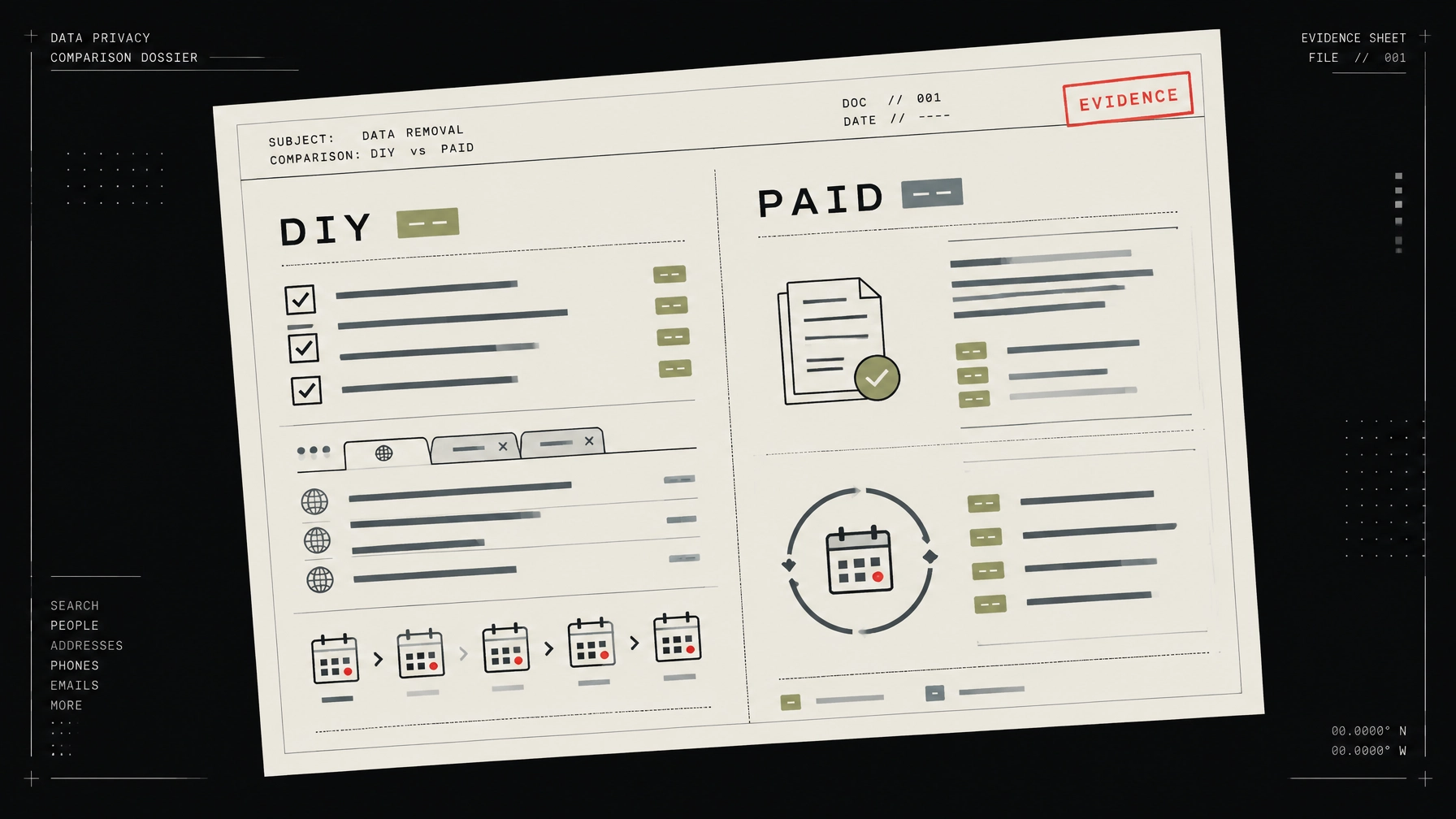
Paying for data removal can be worth it if you want to save time or need help keeping up with repeated opt-outs. But it does not guarantee that every listing will disappear. You can also submit many requests yourself for free.
The choice is less about whether one method works for everyone and more about how much time you want to spend finding listings, filing requests, and checking again later.
What you’re paying for
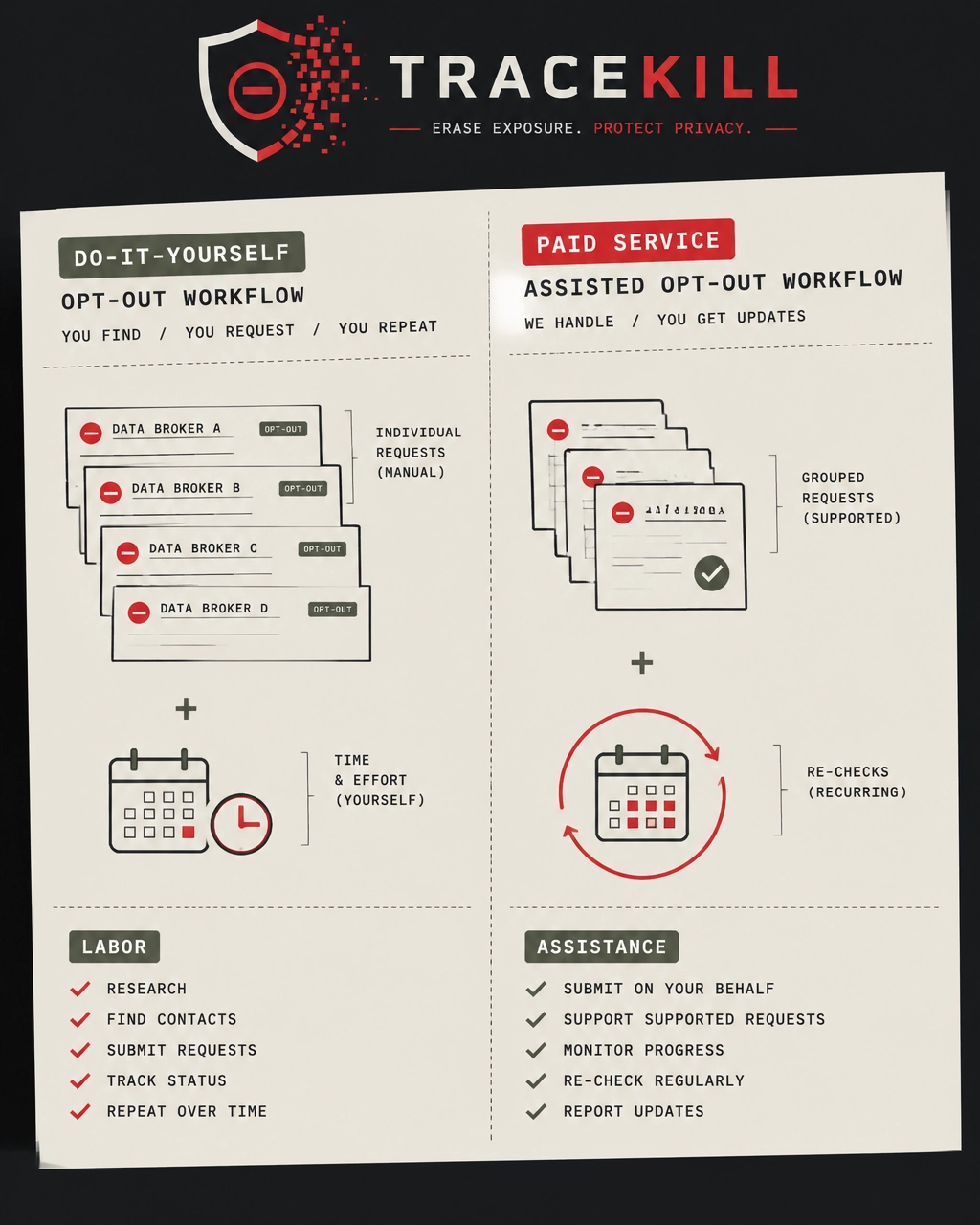
Most data removal services help identify profiles on the people-search and data-broker sources they monitor. Depending on the service and plan, they may also submit supported opt-out requests and re-check for public listings later.
You are generally paying for less repetitive work, not a guarantee that your information will be removed everywhere. Each service covers different sources. Some sites may require extra steps, and processing times vary. Information may also reappear if a broker adds new data or rebuilds a profile.
Data removal focuses on specific listings on particular sites. It does not mean your information can be erased from the internet, or that public records and information held by other organizations will be removed.
DIY: Free, but hands-on
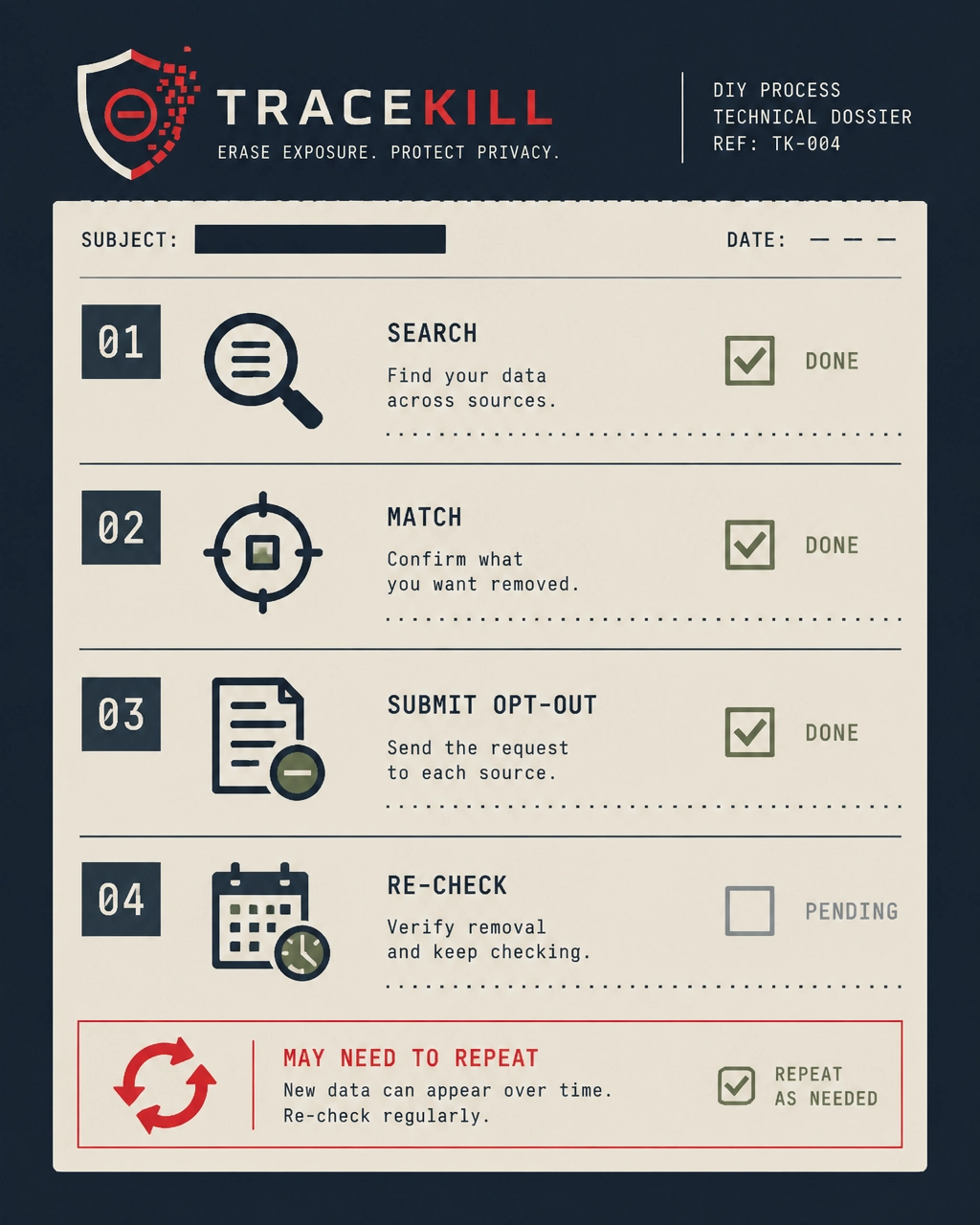
DIY data broker removal is a real option. Many people-search sites provide free opt-out processes. You find the matching profile, follow the site’s instructions, submit the request, and complete any verification it requires.
The main cost is your time and attention. You may need to:
- Search each site for your name and other identifying details.
- Check that a profile actually matches you.
- Submit a separate request for each site or listing.
- Complete email or phone verification where required.
- Keep track of requests and follow up.
- Search again later in case a profile returns.
Processes differ by source, and a similar name can lead you to someone else’s profile. Check identifiers carefully before submitting an opt-out.
You can start with guides for Whitepages, Spokeo, and BeenVerified. They explain the steps for those specific sites. Opting out of one site does not necessarily remove listings on other sites, including related brands.
DIY may suit you if you have a manageable number of listings, are comfortable completing the forms, and can set aside time to check again. It is a practical first step, not a lesser choice.
Paid services: Less admin, not more certainty
A paid service can reduce the time you spend handling requests across the sources it supports. Depending on the plan, the service may help with opt-outs and re-check public listings where verification is available. Some services also provide ongoing monitoring.
That can be useful if you have many listings, do not want to maintain a request-by-request checklist, or simply prefer to spend your time elsewhere. But before subscribing, check the details:
- Which sources are covered? A service cannot act on every broker or people-search site.
- What does the plan do? Confirm whether you submit requests yourself or the service handles supported opt-outs.
- How often does it re-check? Monitoring schedules differ. Look for a clear cadence.
- How are outcomes reported? A submitted request is not the same as a verified public listing removal.
- What will it cost over time? Compare the recurring price with the time and effort you expect to save.
A service should be clear about what it checks, what it can do, and what it cannot confirm. Be cautious of broad claims that suggest complete or permanent removal. Listings can return, and services cannot control every source of personal information.
What does the evidence say?
Paid does not automatically mean more effective. In a four-month Consumer Reports test published in 2024, researchers examined paid removal services and manual opt-outs on a set of people-search profiles. The report found that results varied across services. The test was limited in size and scope, so it should not be treated as a universal success rate or a prediction of what any service will achieve for you.
The useful takeaway is to evaluate the actual process, not just the promise: Which sources are checked? Are requests submitted for you? Are listings re-checked? Does the service distinguish a submitted request from a verified result? You can read the Consumer Reports findings for its methodology and limitations.
Is data removal worth it for you?
Consider paying if you value the time saved, have several profiles to address, or want recurring checks rather than managing every follow-up yourself. A paid plan may also help you keep the task from falling off your list. Still, review the coverage and terms before you choose.
DIY may be the better fit if you have only a few listings, want to avoid a subscription, and can handle the forms and repeat checks yourself. You can start with the sites where a profile is most visible or contains the details you are most concerned about. Save the request dates and check those sources again later.
| Your situation | A reasonable starting point |
|---|---|
| A few listings and time to manage them | DIY opt-outs |
| Many listings or little time for forms | Compare paid services’ coverage and request handling |
| You want to know where to begin | Run a scan, then choose DIY or paid support |
| You expect information to stay gone after one request | Plan for re-checks; listings may return |
No option removes every kind of personal information from every source. The aim is to reduce exposure on specific supported sites and follow up where needed.
How TraceKill fits the decision
TraceKill offers a free scan that uses your name and location to check supported, monitored data-broker sources for likely public profile matches. You do not need an account or payment card to start. A scan result is a starting point: matches are likely profiles, and the sources checked are not every place your information could appear.
If you prefer to submit requests yourself, TraceKill lists a $9.99 one-time removal guide with broker-specific instructions and opt-out links where available. If you would rather have help with supported requests, its $8/month monitoring plan includes opt-out assistance and re-checks. Coverage, results, processing times, and public verification vary by source. Review TraceKill’s current pricing and plan details before choosing.
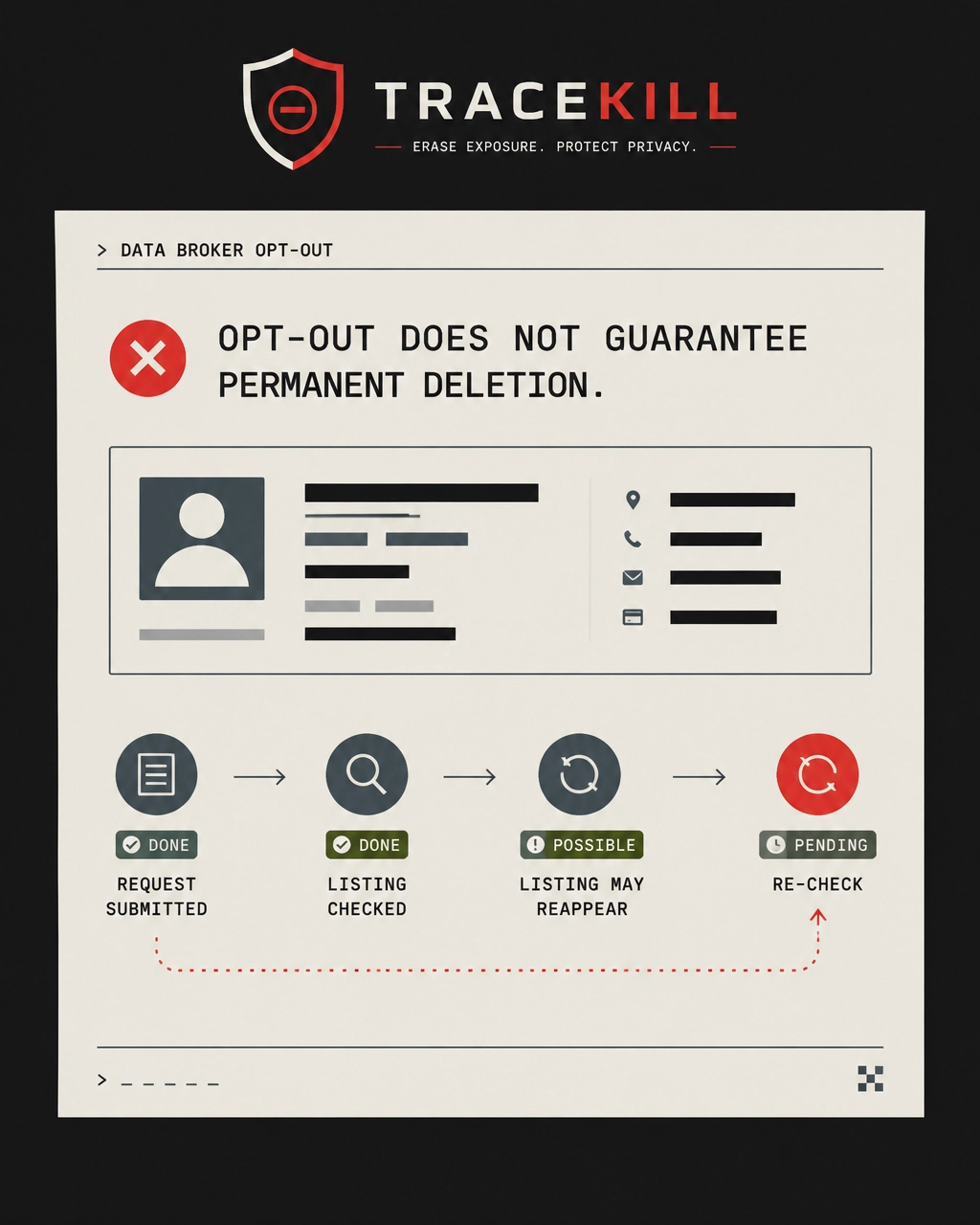
The practical sequence is simple: check for likely matches, review which sources matter to you, and choose whether to file requests yourself or pay for help with supported opt-outs and re-checks. A scan does not require you to buy a plan.
Make the trade based on your time
The personal information removal cost is not only the subscription price. It also includes the time it takes to find profiles, submit requests, and repeat the work when necessary.
If that trade works for you, a paid service may be worthwhile. If you would rather handle a smaller set of opt-outs yourself, DIY is a reasonable route. Either way, check the service’s coverage, keep expectations realistic, and re-check periodically. Start with a free TraceKill scan, then decide whether to follow the DIY steps or explore paid options.
Last verified: November 2026. Broker opt-out processes change often — confirm the current steps on the live page before relying on them.
Free scan — no account required
This is one site. There are hundreds more.
Run a free scan to see which monitored sources list you — no card, no account, results in real time as each broker reports back. Do the opt-outs yourself with our guides, or let us file them for you on a paid plan and re-check month after month. We'll never tell you we erased you from the internet.
No credit card · No account · AES-256 encrypted
Keep going
What Happens to Someone’s Personal Information After They Die?
After a death, families are already handling paperwork and practical decisions. Then a search of the person’s name may bring up social profiles, people-search listings, old addresses, or photos. These can remain online because accounts stay open, data brokers retain profile information, and public records generally remain available. Some of this information can be addressed.…
Selling Your Home? Your Old Address Could Remain Online Long After the Sale
You sold the house, moved, and months later a search of your name still shows the old street. That can happen because a sale creates public records, and other websites may copy or combine information from them. You can take steps to address some of those online copies. The right step depends on where the…
A Data Broker Rejected Your Removal Request. Here’s What to Do
You submitted an opt-out request, received a rejection, or heard nothing back. The listing is still there. That does not always mean you are out of options. Most rejected opt-out requests fall into four categories. The first three are often fixable with a careful follow-up. The fourth may not be: a site might have a…