Can Strangers Find Your Home Address Online? You Might Be Surprised.
It can take only a few details, such as your name and city, for someone to find a page that may show your home address. People-search sites compile information from different sources, and some make profiles available to anyone who looks.
That does not mean every result is accurate, current, or easy to find. But it is worth checking what appears about you and knowing what you can do next.
How an address can show up
People-search sites are a type of data broker. They collect and organize information from sources such as public records, other data companies, and online profiles. A listing may connect your name with current or past addresses, phone numbers, relatives, or other details.
Some information comes from records that are public under the rules where they were filed. Other details may come from commercial datasets or information shared online. One site may also copy information from another.
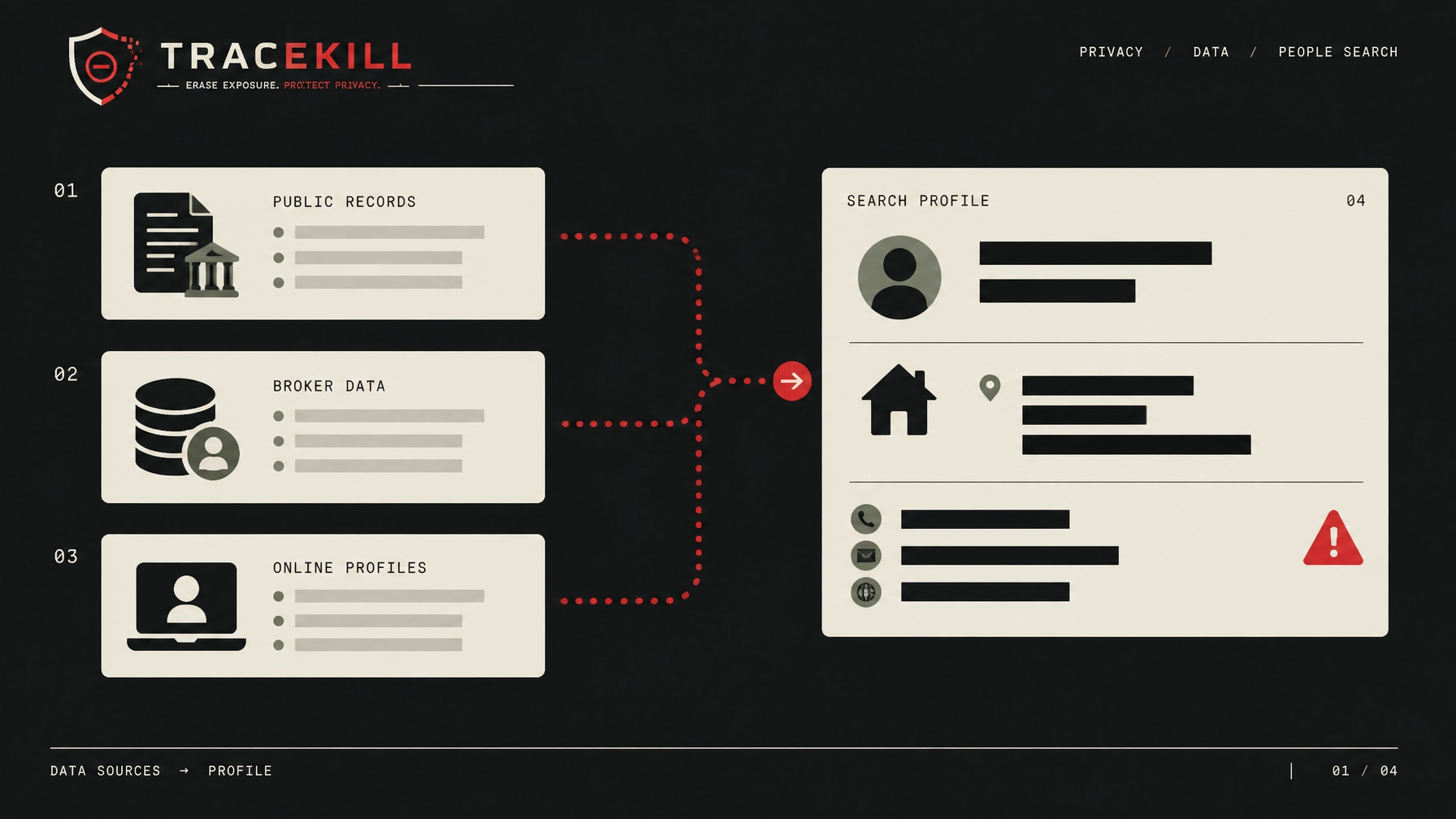
A search result is not proof that every detail is correct. People with similar names can be mixed up, and some profiles contain old or incomplete information. Still, a listing can reveal more than you intended to make easy to find.
Check what appears about you
Start with a few targeted searches. Use your name with your city and state, and try a known phone number or a previous city if you have lived in several places. Look at people-search sites as well as general search results.
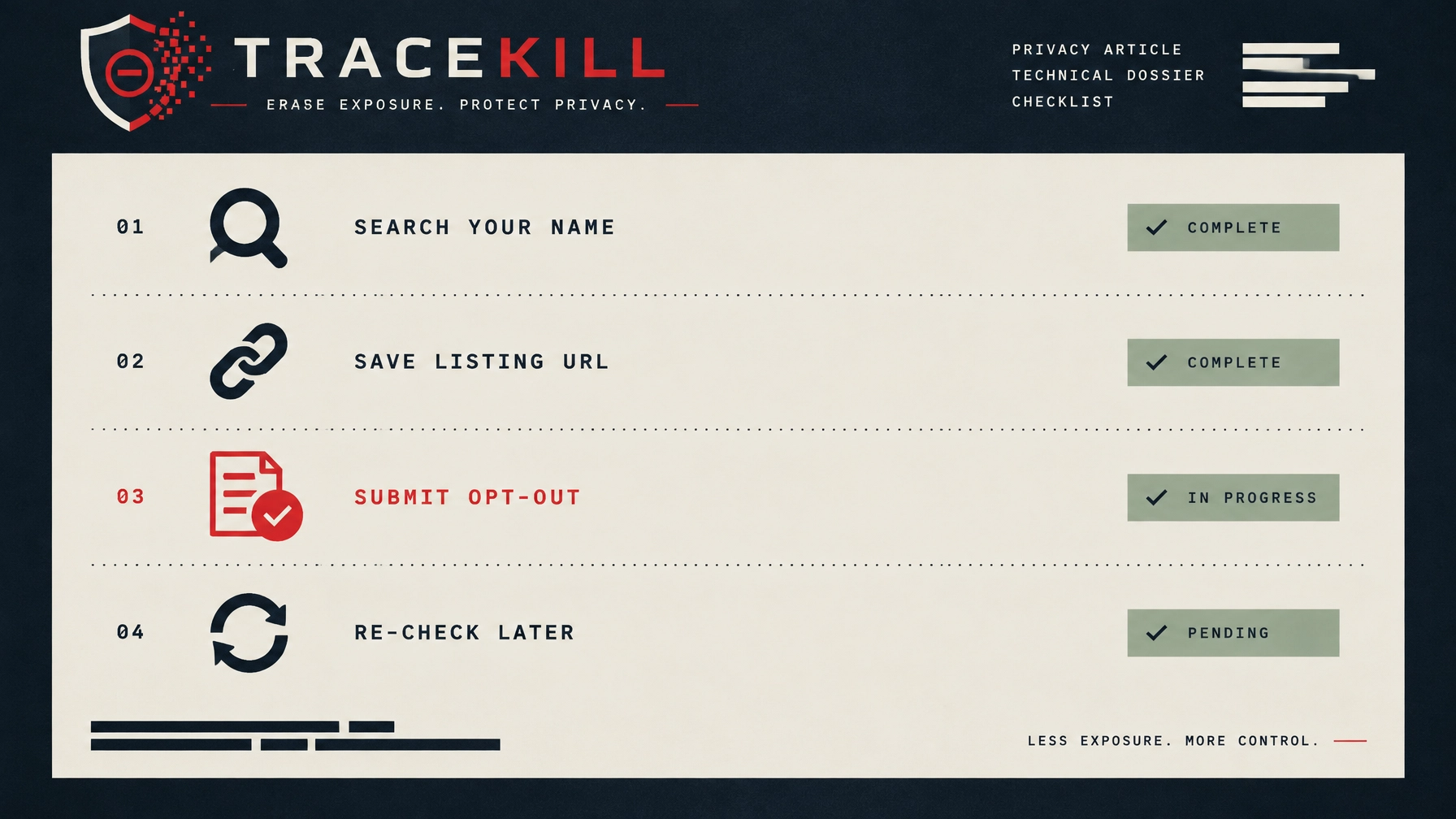
As you check, keep a private record of:
- The site showing the listing
- The exact URL of the profile
- Which details are visible
- Whether the information looks current or outdated
A name-and-location search can return profiles for someone else. Compare more than one detail before treating a result as yours. Don’t share a listing publicly just to ask whether it belongs to you.
If you want a starting point, TraceKill’s free scan checks monitored data-broker and people-search sources for likely public profile matches using your name and location. You do not need an account or payment card to start. Results depend on the sources checked, and a likely match is not a guarantee that every detail belongs to you.
Reduce what people-search sites show
When you find a listing, look for the site’s “opt out,” “remove my information,” or privacy-request instructions. The exact process varies. A site may ask you to confirm your identity or verify a request by email.
Submit requests only through the site’s official process. Give the information needed to identify the listing, but avoid sending extra sensitive details unless the site clearly requires them. Save the confirmation and check the listing again after the site has had time to process the request.
You may need to submit requests to multiple sites, and a site may have more than one profile for you. Removing a listing from a commercial people-search site does not remove the original public record. Information can also return if the site collects it again.
The Federal Trade Commission’s guide to people-search sites explains how these sites gather and sell information and what to expect from opt-outs. TraceKill also has step-by-step guides for Whitepages, Spokeo, and BeenVerified.
Check search engines separately
A listing can appear in Google even after the source site has changed or removed it. Google’s Results about you feature can help you find certain search results that show personal information and request removal when eligible.
There is an important distinction: removing a result from Google Search does not necessarily remove the information from the website hosting it. To address the source, contact the site or submit its opt-out request as well. Google explains the difference in its personal information removal guidance.
Consider the original record
If a broker listing appears to draw from a government record, check the agency that maintains that record. Rules and available privacy options vary by record type and location. A request to a people-search site cannot change the underlying record.
California residents can also use the state’s Delete Request and Opt-out Platform (DROP). It lets eligible residents send one deletion request to more than 600 registered data brokers. Data brokers began processing requests on August 1, 2026, and status updates may take time. DROP applies to participating registered brokers; it does not remove government records or every instance of information online.
Keep checking over time
An opt-out is not a one-time guarantee. Sites can rebuild profiles from newly collected information, so a listing that disappears may show up again. Set a reminder to check important sites periodically and repeat requests where needed.
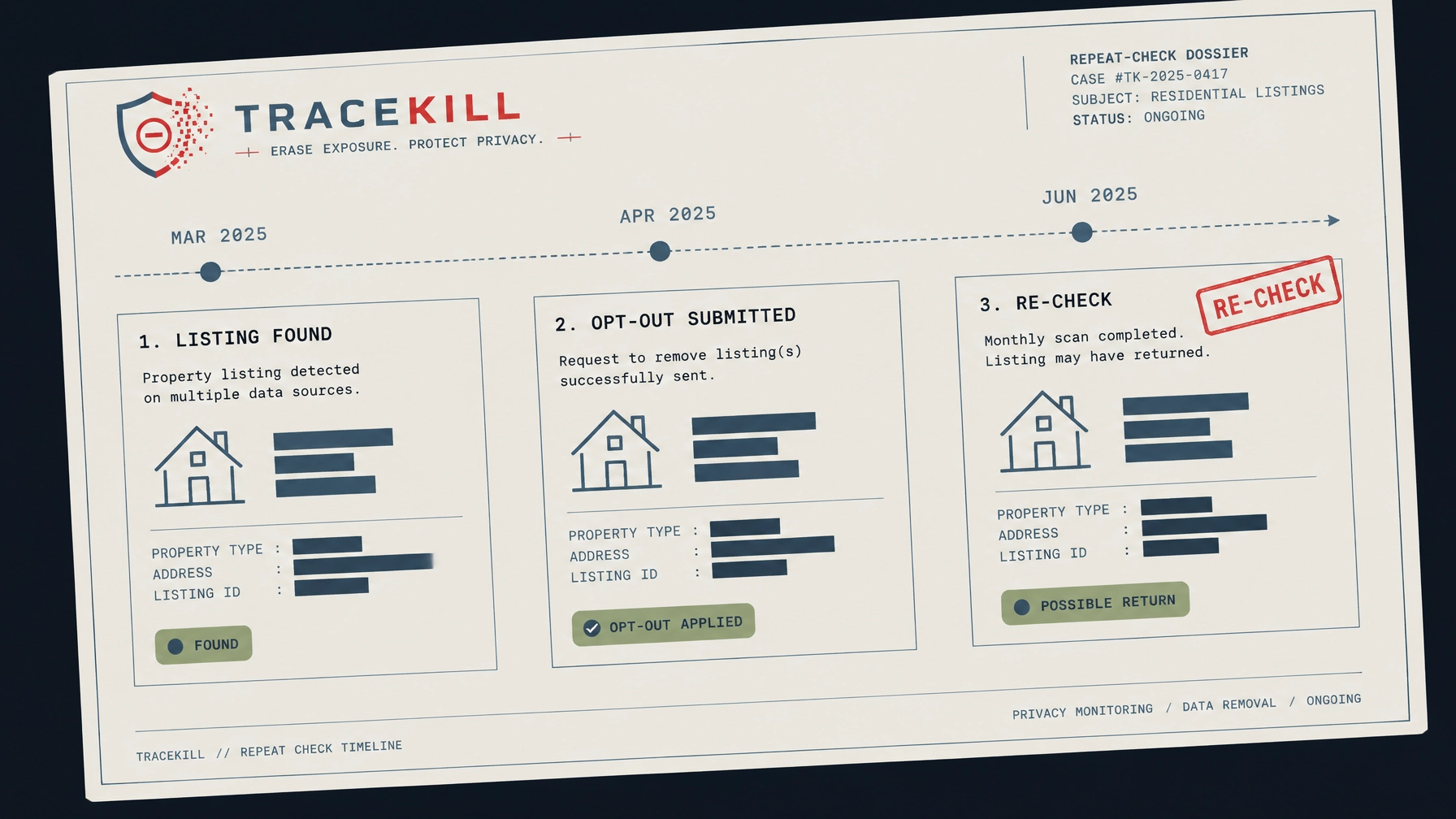
TraceKill checks monitored data-broker and people-search sites for likely matches. Paid plans offer help with supported opt-out requests and re-checks where public verification is available. Coverage, results, and processing times vary by source, and listings can reappear. The goal is to help you understand what is showing up and keep track of the next steps, not promise complete removal.
If the exposure creates a safety concern
If you are dealing with stalking, threats, or another immediate safety risk, consider contacting local law enforcement or a qualified victim-support organization. Ask whether your state offers an address-confidentiality or substitute-address program. Use care when searching or submitting requests on a shared device or account if someone else may be monitoring it.
Take a practical first step
You may not be able to control every public record or every copy of your information. But you can check what monitored sources may show, request removal from sites that support opt-outs, review search results, and check again later.
Start with a free TraceKill scan to see whether monitored sources return likely matches. No account or payment card is required to begin.
Last verified: November 2026. Broker opt-out processes change often — confirm the current steps on the live page before relying on them.
Free scan — no account required
This is one site. There are hundreds more.
Run a free scan to see which monitored sources list you — no card, no account, results in real time as each broker reports back. Do the opt-outs yourself with our guides, or let us file them for you on a paid plan and re-check month after month. We'll never tell you we erased you from the internet.
No credit card · No account · AES-256 encrypted
Keep going
What Happens to Someone’s Personal Information After They Die?
After a death, families are already handling paperwork and practical decisions. Then a search of the person’s name may bring up social profiles, people-search listings, old addresses, or photos. These can remain online because accounts stay open, data brokers retain profile information, and public records generally remain available. Some of this information can be addressed.…
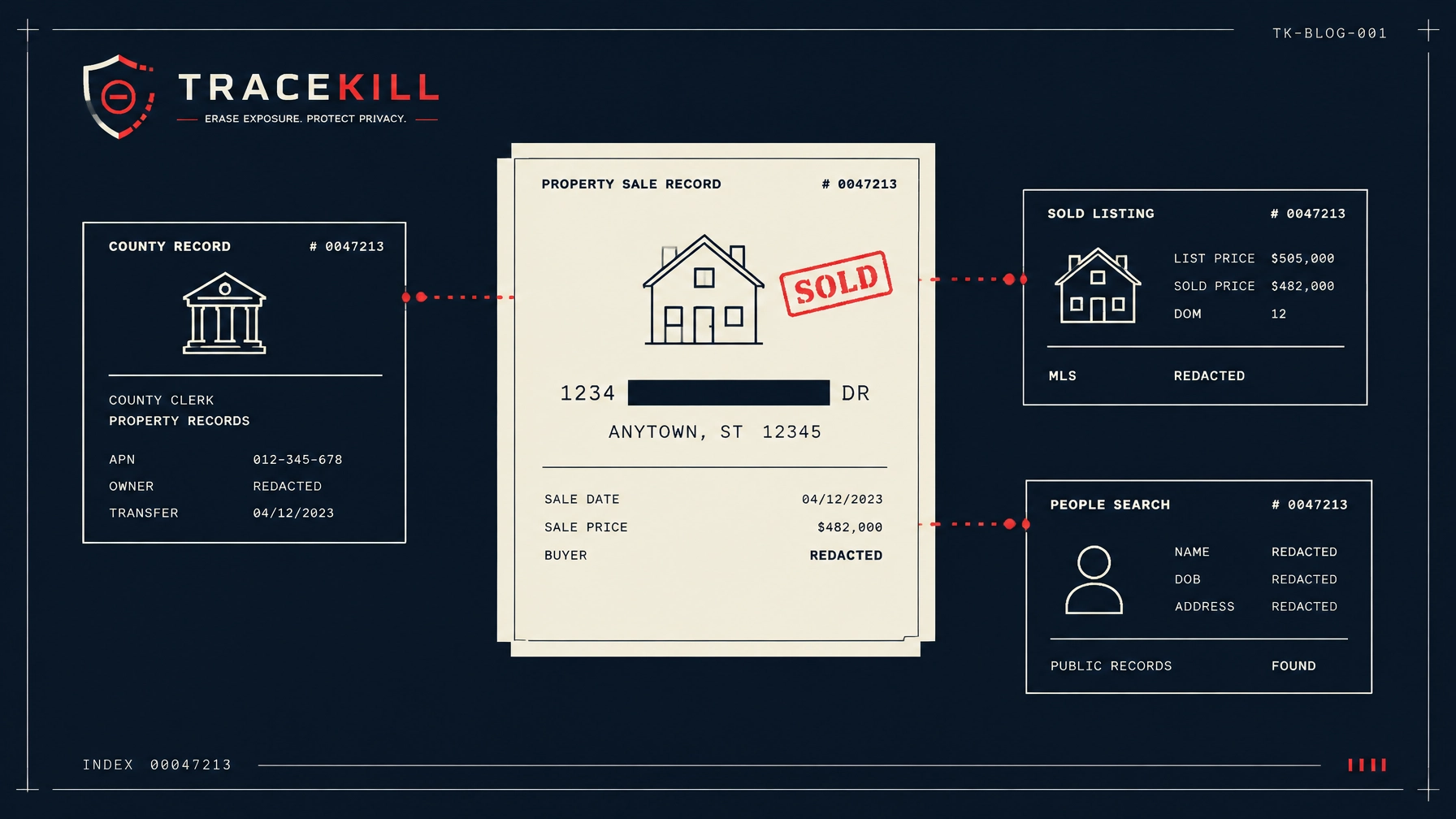
Selling Your Home? Your Old Address Could Remain Online Long After the Sale
You sold the house, moved, and months later a search of your name still shows the old street. That can happen because a sale creates public records, and other websites may copy or combine information from them. You can take steps to address some of those online copies. The right step depends on where the…
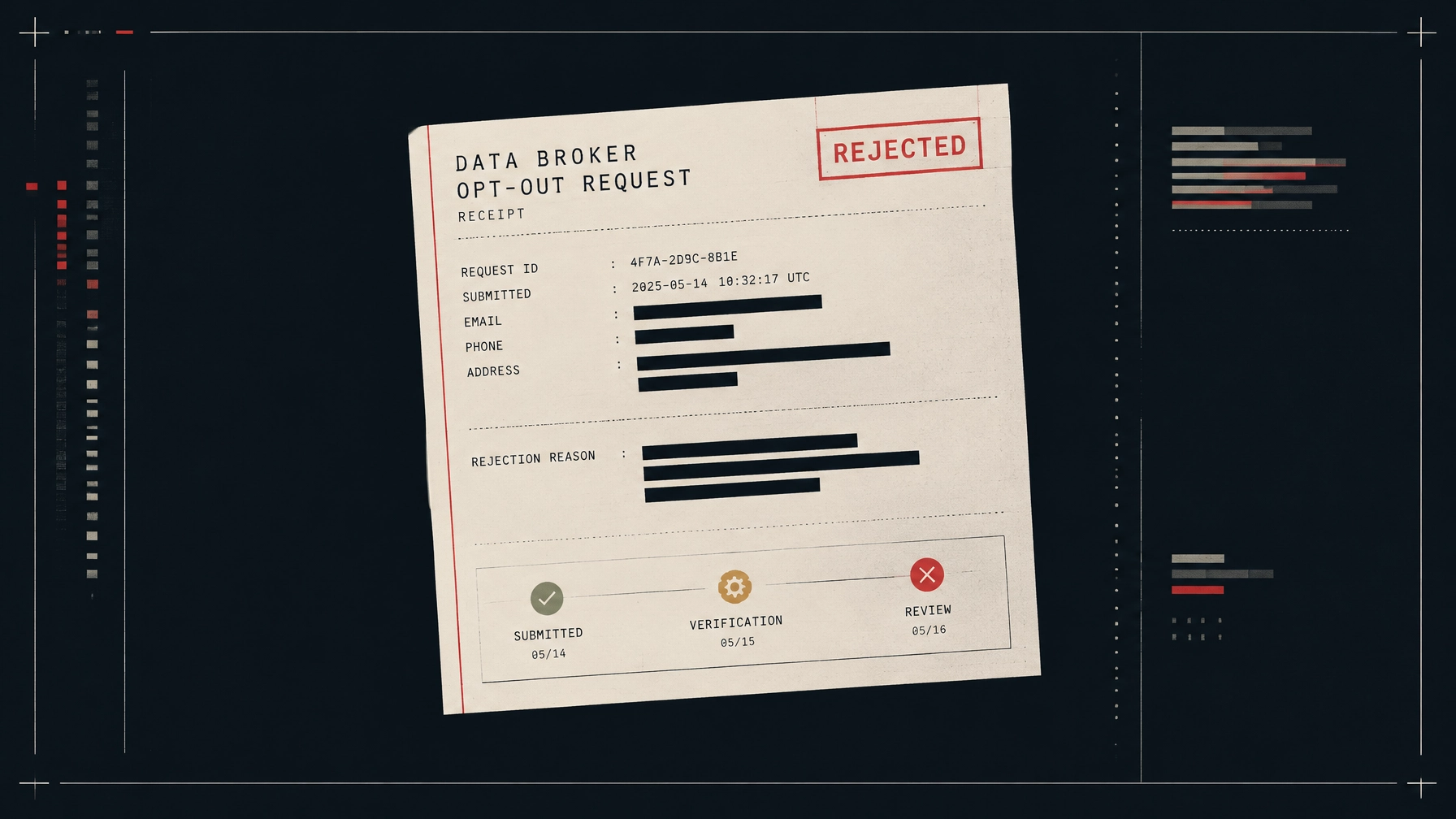
A Data Broker Rejected Your Removal Request. Here’s What to Do
You submitted an opt-out request, received a rejection, or heard nothing back. The listing is still there. That does not always mean you are out of options. Most rejected opt-out requests fall into four categories. The first three are often fixable with a careful follow-up. The fourth may not be: a site might have a…