How Much Does a Scammer Already Know About You Before They Contact You?
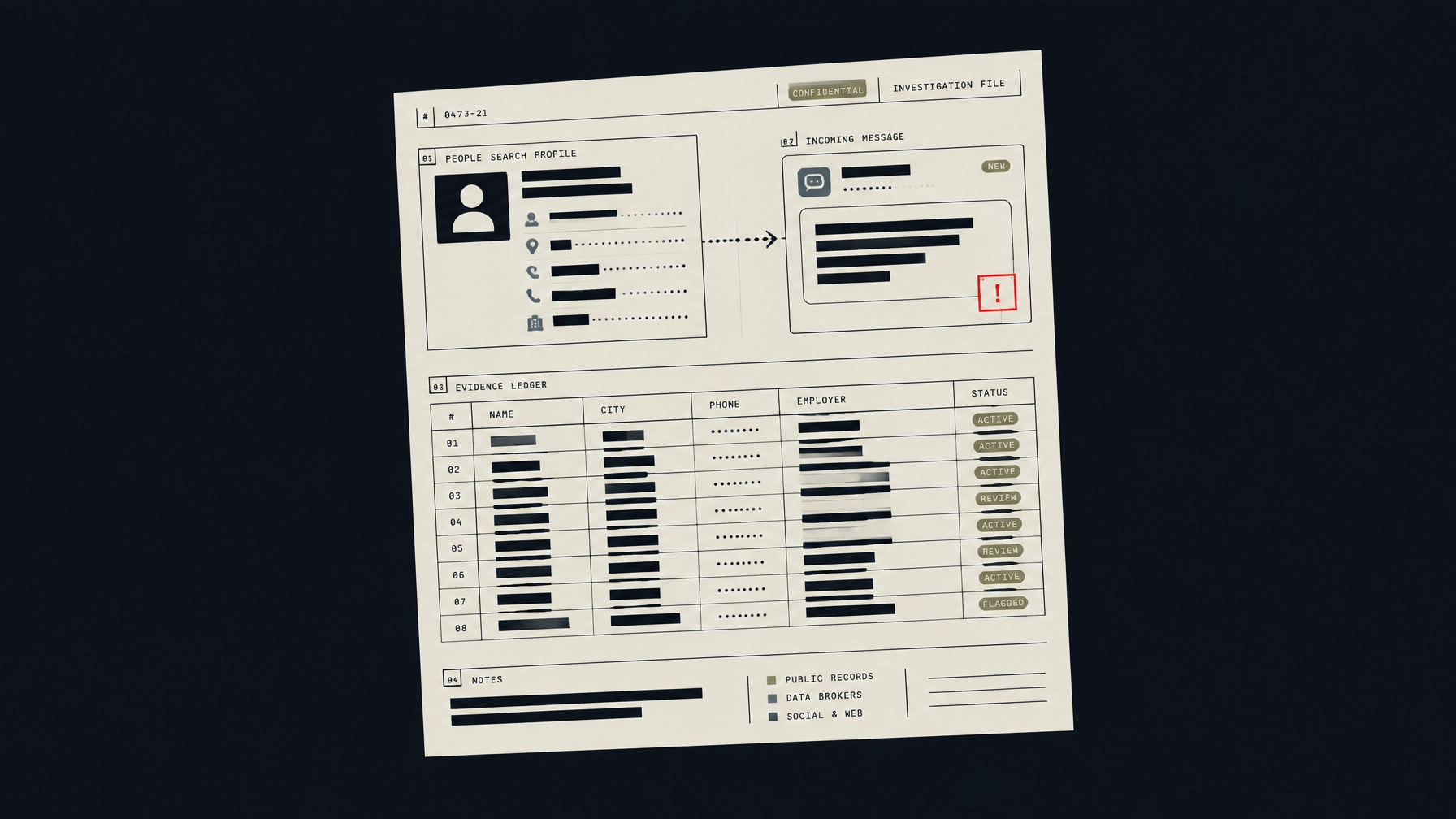
A text arrives using your name and city. A caller mentions your employer, a family member, or a recent purchase. The details may be real, but that does not prove the person contacting you is who they claim to be.
Some of what a scammer knows may be public. People-search sites and data brokers can collect information from public records and other sources, then make it searchable in one place. Social media, old accounts, and past data breaches can add more pieces.
You cannot tell exactly where a stranger got a detail just because they mention it. But you can learn what kinds of information may be available, how scammers use it, and what steps can reduce your exposure.
What can be assembled from public sources?
A people-search profile may connect information such as your name, current or past addresses, phone numbers, possible relatives, and other public-record details. Depending on the site and the person, profiles may include email addresses or links to other records.
Professional details can be discoverable too. A public company bio or professional profile may show your employer, job title, or team. Social posts can reveal family names, travel plans, hobbies, and routines. Court records and other public records may also be accessible, depending on where you live and what the record contains.
A scammer may not find every detail in one place. They can combine details from several sources into a rough profile. That process is often called reconnaissance: gathering information before making contact.
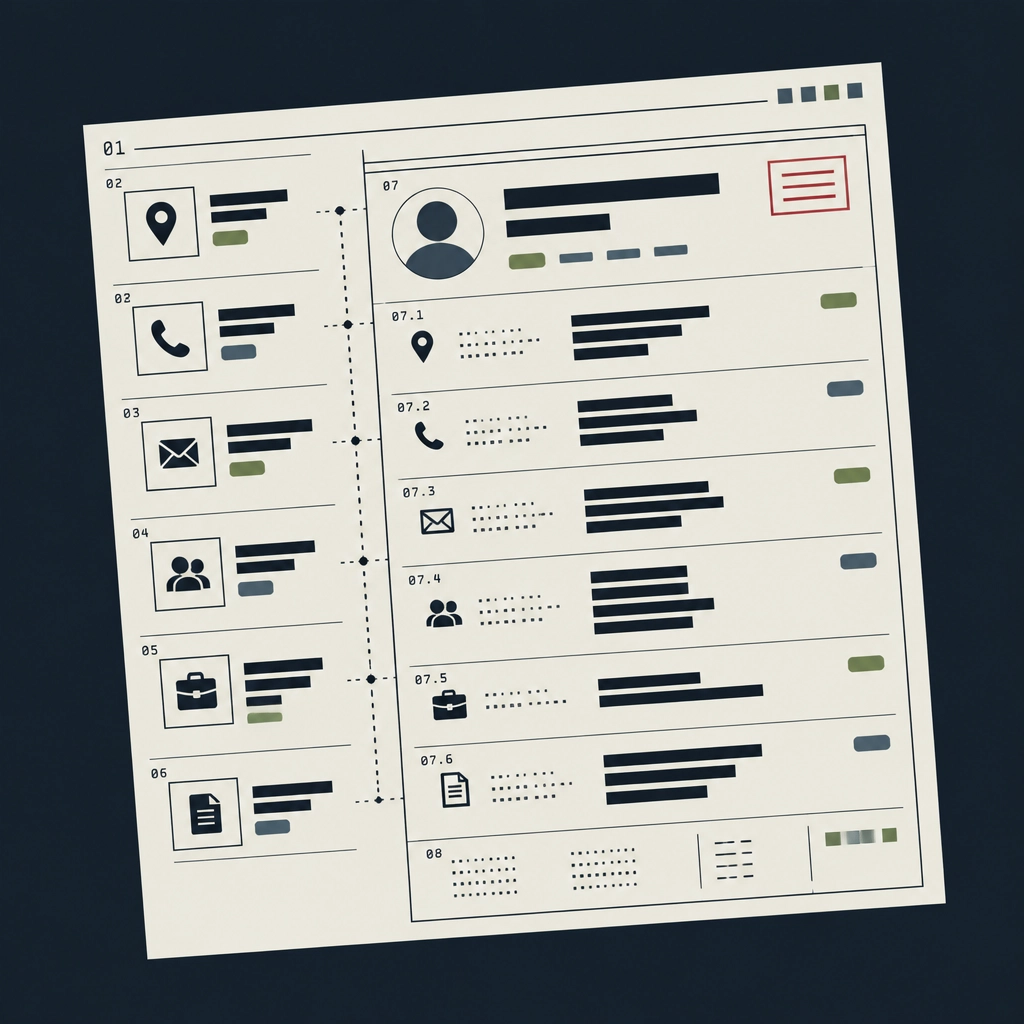
How personal information makes scams more convincing
A generic message is easier to ignore. A message with a detail that sounds familiar can seem more credible. Scammers use personal information to choose a believable story and make their request feel relevant.
For example, an unsolicited message might claim to be from a bank and mention your city or a financial product. That detail alone does not show the sender has access to your account. A fake workplace message might use your employer’s name and imitate a manager or IT support. A fraudster might use relatives’ names to pose as someone you know.
Scammers can also try to move a conversation to another channel, such as asking you to leave email for a text or phone call. That can make it harder to verify the original sender or preserve the conversation.
AI tools can make impersonation attempts easier to scale. In some cases, a scammer may use publicly available audio to imitate a person’s voice and combine it with family or workplace context. A familiar voice is not reliable proof of identity. Agree on a verification method with family or colleagues, and confirm unusual requests through a separate, trusted channel.
These are realistic ways a scam may be personalized, not evidence that every targeted message uses broker data or advanced technology.
Why data brokers and scams are connected
Data brokers and people-search sites can make scattered information easier to search. A profile may connect names, addresses, phone numbers, relatives, and other details that help someone decide whom to contact and what story to tell. The profile may be incomplete or wrong, but even partial information can make an impersonation attempt sound plausible.
A 2026 survey by TrendCandy, conducted on behalf of Optery, asked 421 cybersecurity leaders at large enterprises about social-engineering attacks. Respondents ranked data-broker and people-search sites as a primary source of attacker intelligence, ahead of social media and dark-web breach data. They also reported that attackers combine personal and professional details, including addresses, personal mobile numbers, emails, and workplace reporting structures. About three-quarters of surveyed organizations reported credential compromise from targeted social engineering.
These findings describe surveyed organizations’ perceptions and reported experiences. They do not prove that a broker profile caused a particular compromise, or that any individual is at risk. The survey focused on large-enterprise cybersecurity leaders, and it was commissioned by a company that provides personal-data removal services. Treat it as a useful signal, not a measure of your personal odds.
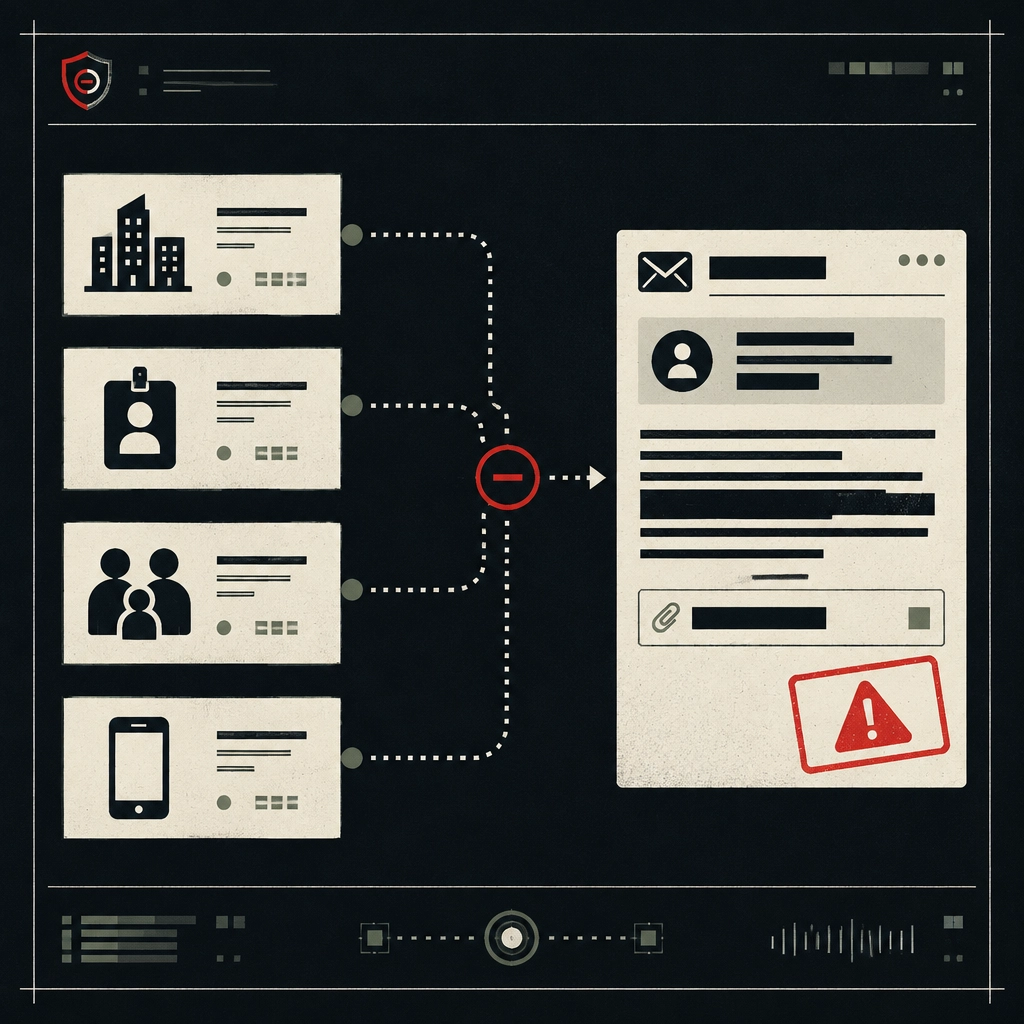
Warning signs to notice
A personalized message can still be a scam. Pay attention when someone:
- Uses your name and a specific detail, then asks for money, credentials, or sensitive information.
- Creates urgency around a real part of your life, such as a work deadline, delivery, or family emergency.
- Pressures you to move to a different communication channel or keep the conversation secret.
- Pushes you to click a link, open an attachment, share a one-time code, or approve a login.
- Claims to represent a familiar organization but gives you no safe way to verify the request.
One accurate detail does not confirm who sent the message. Caller ID can be spoofed. A detail may come from a social post, an old record, a prior data breach, or a source you have not considered. Treat unexpected requests carefully even when the sender seems to know something about you.
Reduce what is easy to find
You do not need to disappear from the internet to take useful steps. Start with the information you can control.
- Review social profiles. Limit public access to personal posts, family details, location tags, and routine updates. Check older posts and the privacy settings on accounts you still use.
- Separate work and personal contact details where practical. Avoid posting personal phone numbers or personal email addresses on public professional pages. At work, follow your organization’s process for verifying unusual requests.
- Opt out of people-search listings. Each site has its own process, and one request will not cover every broker. TraceKill’s guides explain steps for Whitepages, Spokeo, and BeenVerified.
- Re-check over time. Listings can return when a site refreshes its data. An opt-out can reduce exposure on that source, but it does not remove underlying public records or guarantee that your information will not appear elsewhere.
You can also review our guide to removing personal information from Google. Removing a search result and opting out of a data-broker profile are different processes, so check what each action covers.
If you suspect a targeted scam
Pause before responding. Do not click links, open unexpected attachments, share a verification code, or send money based on an incoming message.
Verify the request independently. Contact the organization using the number or website on an official statement or card, not the contact details in the message. For a workplace request, use your company’s established IT or security channel. For a family emergency, call the person using a number you already know.
If you shared account information, contact the relevant provider through its official channel, change affected passwords, and follow its steps to secure the account. You can report scams to the Federal Trade Commission. The FTC says reports help law enforcement identify patterns, though it does not resolve individual reports.
Check your exposure
TraceKill checks monitored data-broker and people-search sources for likely public profile matches. The free scan uses your name and location, requires no account or payment card, and can help you identify potential exposure on sources it monitors.
From there, you can use DIY opt-out guidance or choose paid support. TraceKill’s one-time removal guide is $9.99. The $8/month monitoring plan includes supported opt-out help and monthly re-checks where public verification is available. Coverage, results, and processing times vary by source. Some listings may not be verifiable, and no service can guarantee complete removal.
Reducing public exposure may make some forms of profiling less convenient. It cannot prevent scams, so keep using independent verification and account-security practices. To learn more, visit TraceKill or start with the free scan.
Last verified: November 2026. Broker opt-out processes change often — confirm the current steps on the live page before relying on them.
Free scan — no account required
This is one site. There are hundreds more.
Run a free scan to see which monitored sources list you — no card, no account, results in real time as each broker reports back. Do the opt-outs yourself with our guides, or let us file them for you on a paid plan and re-check month after month. We'll never tell you we erased you from the internet.
No credit card · No account · AES-256 encrypted
Keep going
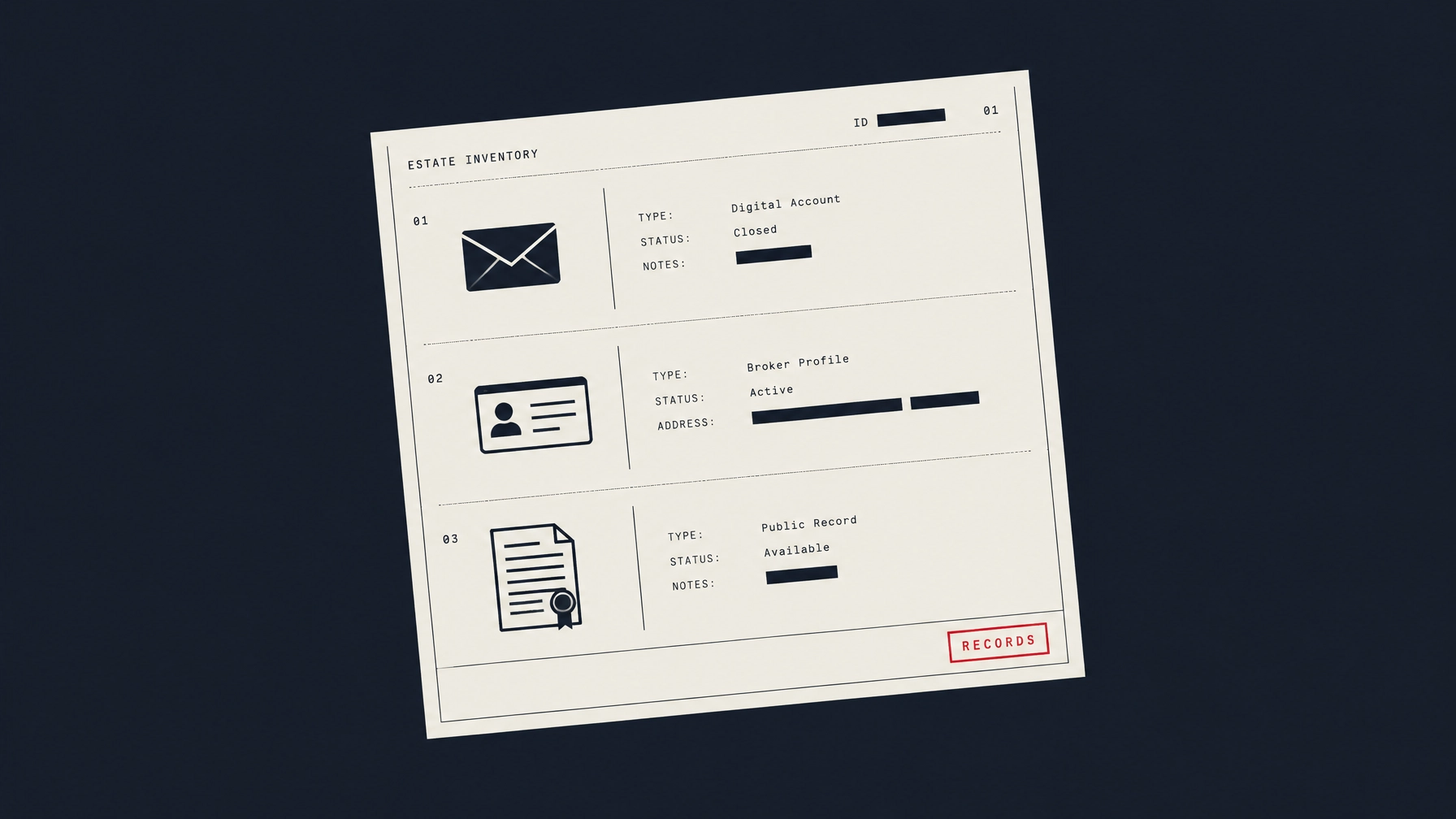
What Happens to Someone’s Personal Information After They Die?
After a death, families are already handling paperwork and practical decisions. Then a search of the person’s name may bring up social profiles, people-search listings, old addresses, or photos. These can remain online because accounts stay open, data brokers retain profile information, and public records generally remain available. Some of this information can be addressed.…
Selling Your Home? Your Old Address Could Remain Online Long After the Sale
You sold the house, moved, and months later a search of your name still shows the old street. That can happen because a sale creates public records, and other websites may copy or combine information from them. You can take steps to address some of those online copies. The right step depends on where the…
A Data Broker Rejected Your Removal Request. Here’s What to Do
You submitted an opt-out request, received a rejection, or heard nothing back. The listing is still there. That does not always mean you are out of options. Most rejected opt-out requests fall into four categories. The first three are often fixable with a careful follow-up. The fourth may not be: a site might have a…